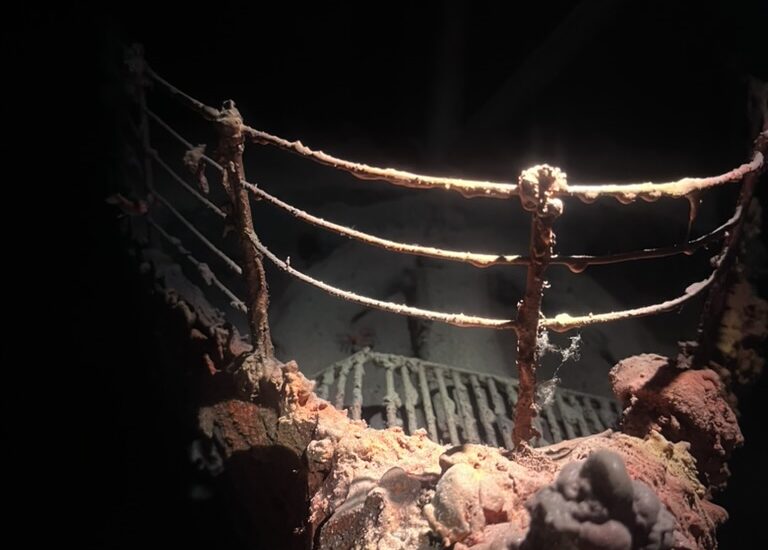
As we look out of our hotel window, we look up the hill to see the Halifax Citadel, a giant, star shaped fortress perched on the highest point of Halifax.
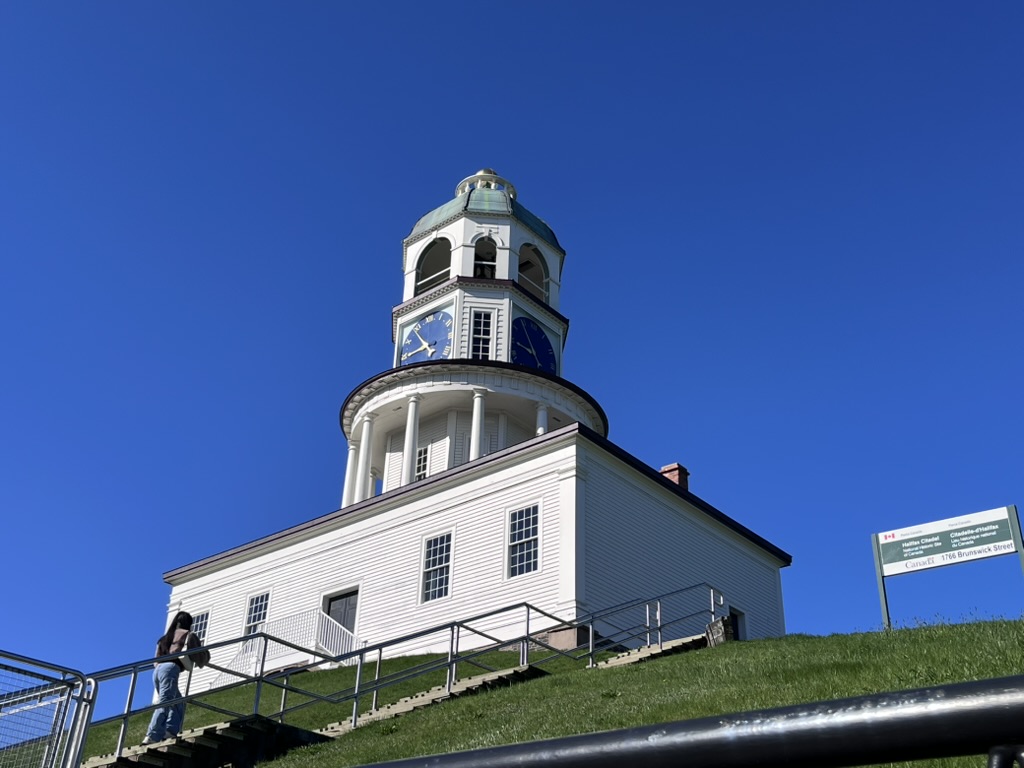
Established by the British in 1749, the current structure is actually the fourth to occupy the site, constructed between 1828 and 1856 to protect the strategic naval base from perceived threats. Though the fortress never saw active battle, it acted as a major military post through the 19th and early 20th centuries, including serving as a detention center and anti-aircraft command during both World Wars.
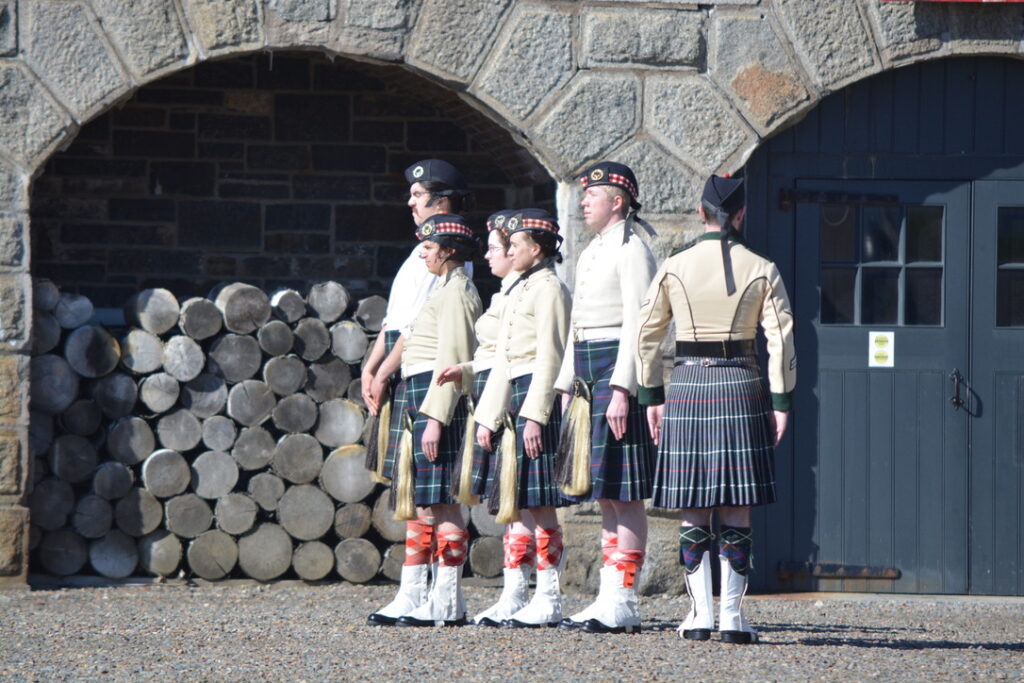
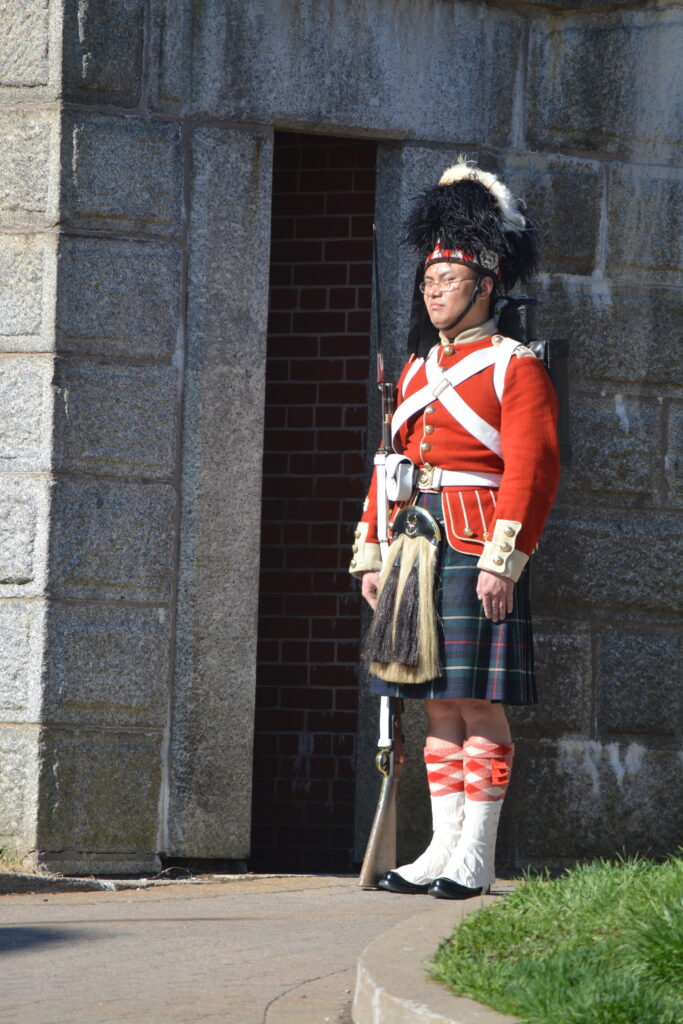
It’s quite a climb up from the town to the Citadel but the views back over the city are fabulous. When you get to the entry there’s a very serious looking soldier in uniform – actually a volunteer. The uniform is authentic – the 78th Highland Regiment of Foot was raised in 1793 by Colonel Francis Humberston MacKenzie and Lord Seaforth (Chief of the Clan MacKenzie). Yes, I had to Google that. We got chatting to one of the historical re-enactors who told us the volunteers go through a fairly gruelling training so they know how to march, use their weapons, and behave authentically.
Handed over to Canada in 1906, the Citadel was later designated a National Historic Site in 1935. Today, it is managed by Parks Canada as a living history museum, famous for its daily noon cannon fire, stunning city views, and the iconic Garrison Clock.
A guide, Clare (in full Victorian costume) took us round the Citadel explain8ng its history and defence systems, and then left us to our own devices to explore. There were a couple of fascinating exhibits including one about the Halifax explosion (of which more later). An older gentleman started chatting to us – his father had been severely wounded in the disaster. On December 6, 1917, the French cargo ship SS Mont-Blanc, laden with high explosives, collided with the vessel SS Imo in Halifax Harbour, resulting in the largest human-made explosion prior to the atomic bomb, which devastated the city and killed nearly 2,000 people.
Which brings us to our exploration of the Maritime Museum on the Halifax waterfront. Two exhibits stood out for us l the Halifax explosion and the sinking of the White Star Line’s Titanic
The Halifax Explosion
it’s the major disaster hardly anyone outside Nova Scotia has heard of. The biggest explosion in history, until Hiroshima. The Halifax Explosion of December 6, 1917, stands as one of the deadliest accidental explosions in human history. On that morning, the French munitions ship Mont-Blanc, laden with nearly 3,000 tonnes of high explosives, collided with the Norwegian vessel Imo in the Narrows of Halifax Harbour. The resulting fire triggered a catastrophic blast that obliterated the Richmond district of Halifax’s North End, killing approximately 2,000 people, injuring 9,000 more, and leaving some 25,000 residents without adequate shelter in the dead of a Nova Scotia winter. The explosion generated a pressure wave that shattered windows as far as 80 kilometres away and produced a tsunami that swept the harbour’s shores. Relief efforts poured in from across Canada and the United States — most notably from Boston, whose swift and generous aid is still commemorated today by Nova Scotia’s annual gift of a Christmas tree to the city. The disaster prompted major reforms in maritime safety regulations and remains a defining moment in Halifax’s collective memory and identity.
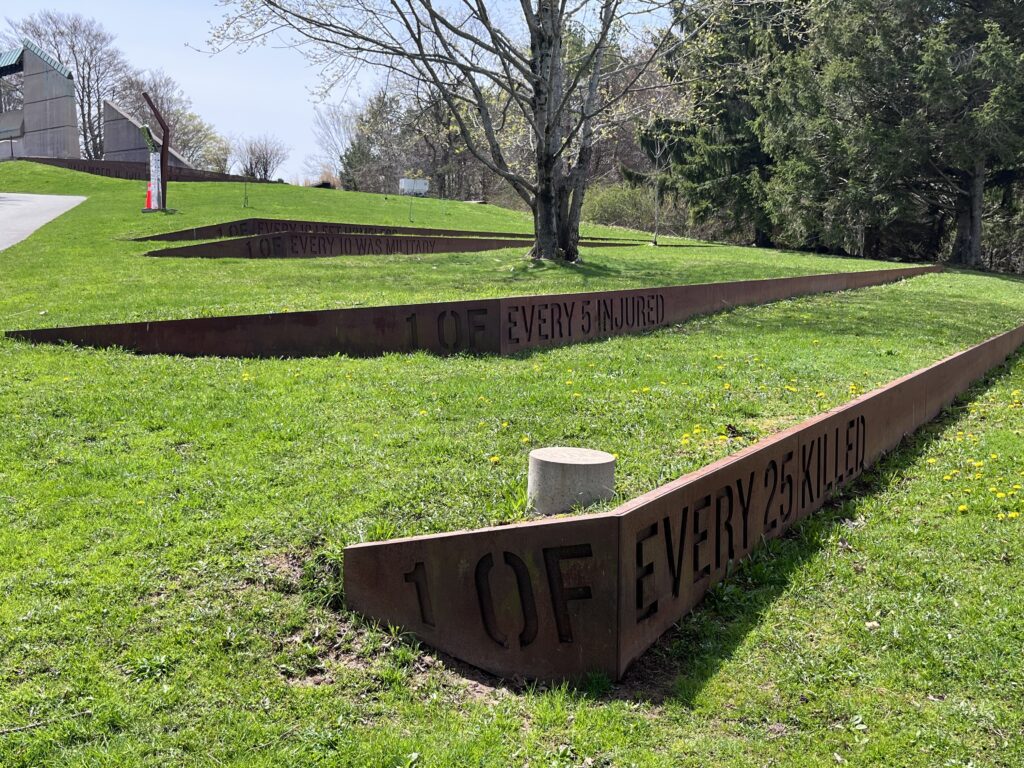
We visited the memorial bell tower, erected to commemorate the disaster, set in a beautiful small park. As you walk in, there are giant metal plates setting out the somber statistics (above). One of every 25 locals killed, one of every five injured by the blast’s effects.
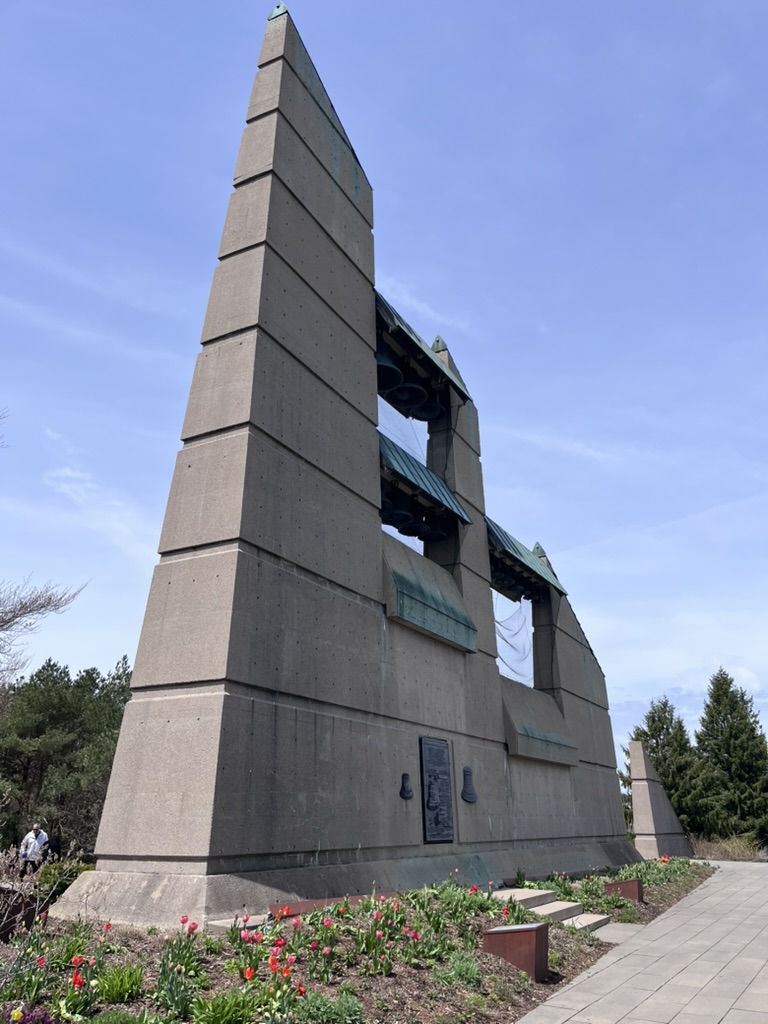
The tower itself is an impressive modern block, and at the base, there is a commemoration of the heroic actions of Vince Coleman. He was a train dispatcher whose selfless courage in the final moments before the Halifax Explosion saved hundreds of lives. When he learned that the burning Mont-Blanc was about to detonate, Coleman initially fled with his colleagues but turned back alone to his telegraph post upon realizing that an incoming passenger train carrying roughly 300 people was heading straight toward the harbour. He stayed at his post and transmitted an urgent warning message — “Hold up the train. Munitions ship on fire in harbour making for Pier 6 and will explode. Guess this will be my last message. Good-bye boys.” — alerting the incoming train and stations up and down the line.
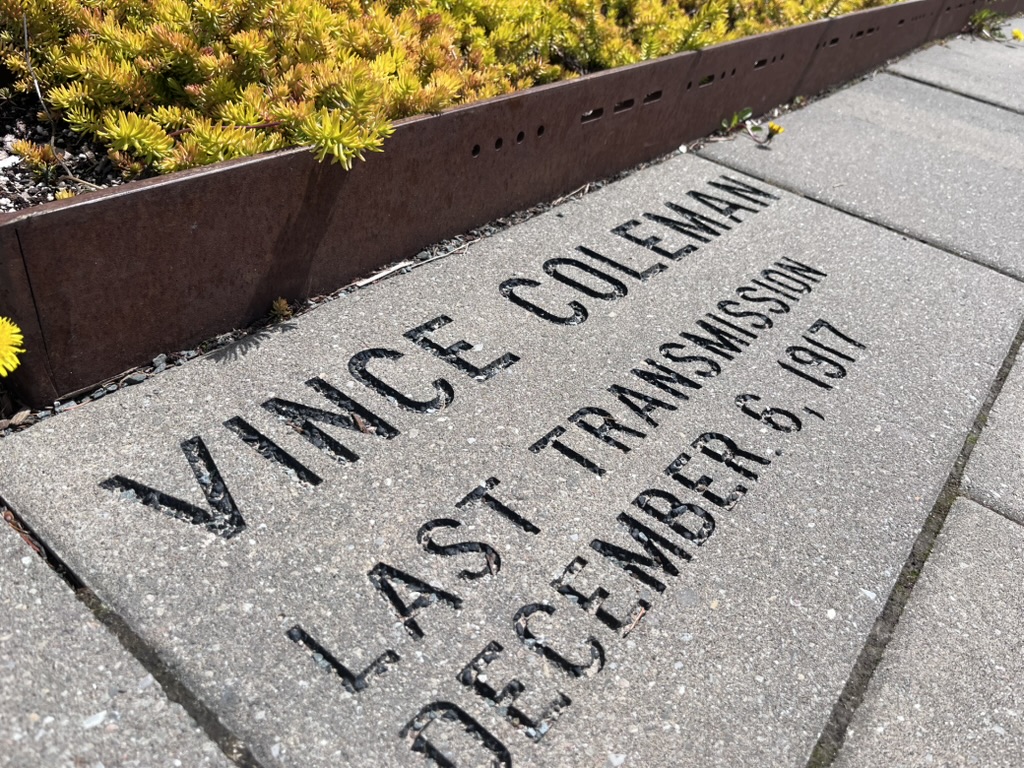
That message, in Morse code, is repeated on the memorial. Coleman was killed moments later when the explosion struck, but his message stopped the passenger train in time, sparing its passengers from almost certain death. He is remembered as one of the great everyday heroes of Canadian history, a man who chose to give his life so that strangers might live.
Titanic
The history of Halifax is inextricably linked to the sinking of the Titanic in 1912. When the Titanic went down roughly 700 kilometres southeast of Halifax, the city became the primary base for the recovery operation. The cable ship Mackay-Bennett was dispatched from Halifax to retrieve bodies from the wreckage site, eventually recovering over 300 victims, of whom many could not be identified. A significant number of the recovered dead were brought back to Halifax, where makeshift morgues were set up — most notably at the Mayflower Curling Club — to process, identify, and embalm the bodies. In total, 150 victims of the disaster are buried in Halifax, the largest number in any single city, with graves spread across three cemeteries: Fairview Lawn, Mount Olivet, and Baron de Hirsch.
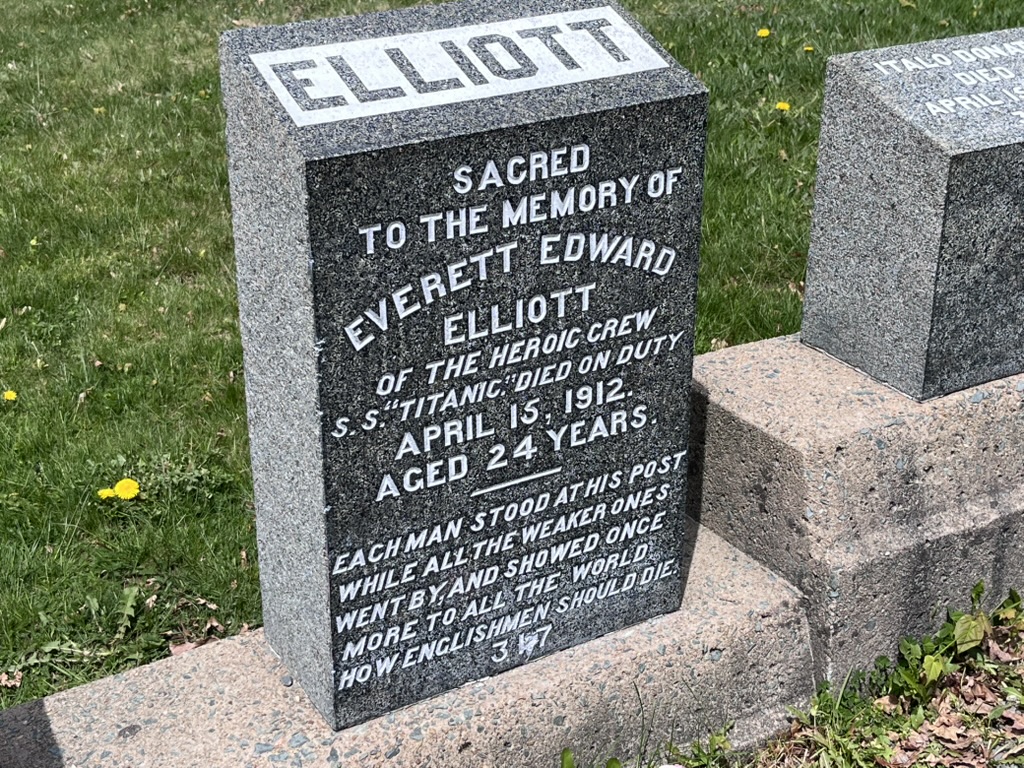
Fairview Lawn in particular has become a place of pilgrimage for Titanic enthusiasts from around the world. Halifax’s Maritime Museum of the Atlantic also holds one of the most significant collections of authentic Titanic artifacts and exhibits anywhere, further cementing the city’s deep and lasting connection to that tragedy.
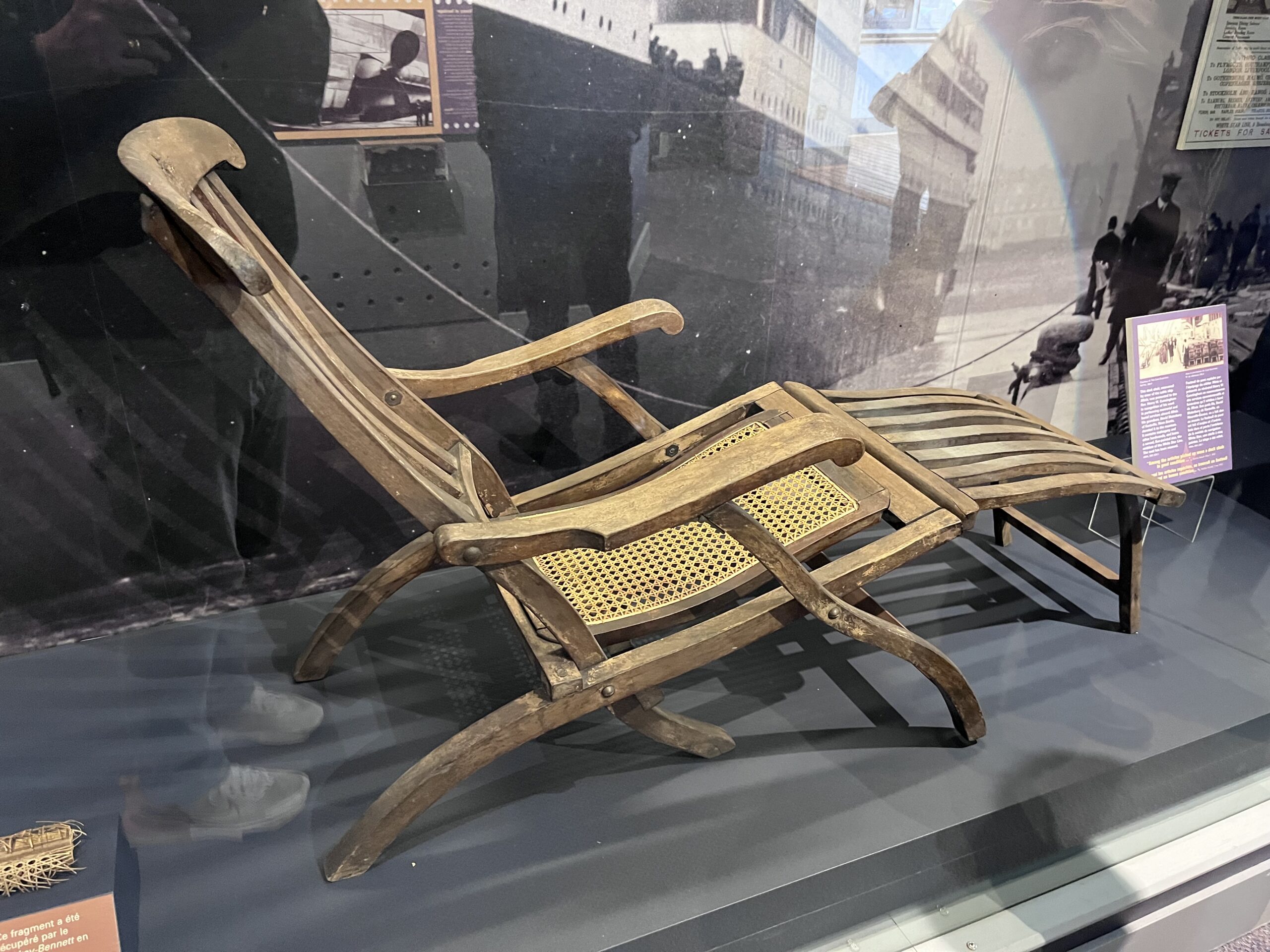
In the museum, there are articles from the disaster, picked up from the waters at the time, not from more recent deep sea exploration. This actually is one of the deck chairs from the Titanic
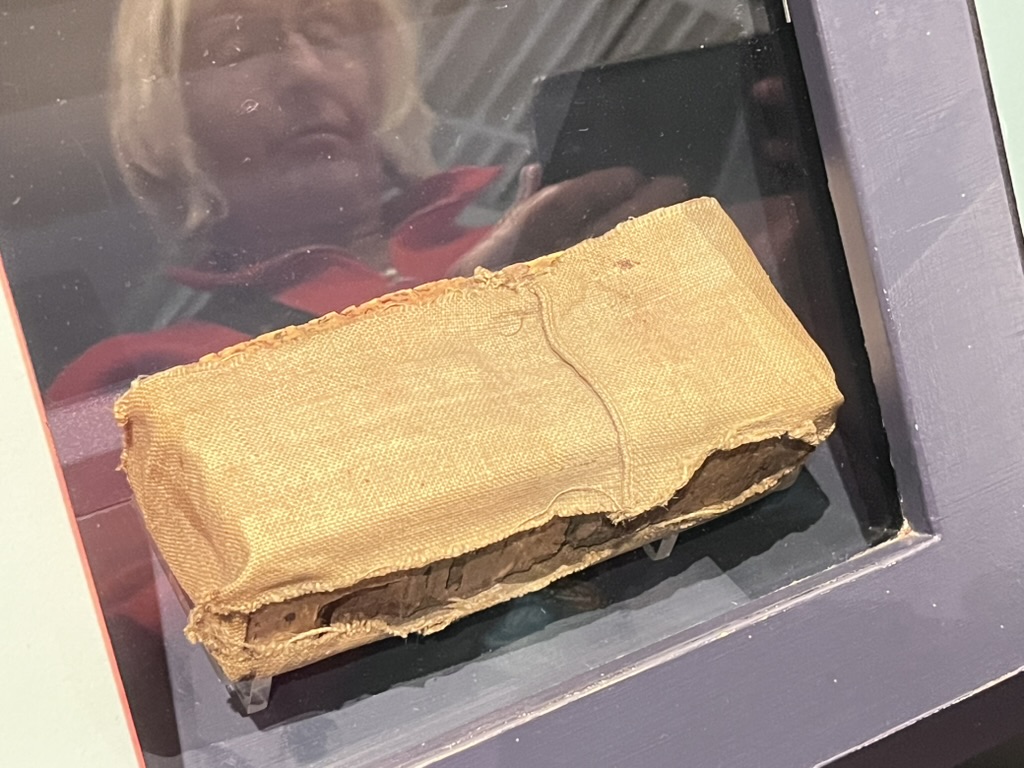
And this is part of the life jacket worn by millionaire John Jacob Astor.
All in all, a fascinating couple of days exploring some grim history connected to Halifax – but we ended with a lovely walk around the Frog Pond nature reserve, with charming squirrels and I love squirrels…